Product seller
You need clean product photos for a listing and the source contains no private details.
A bg eraser may be a reasonable choice after checking the service destination and download flow.
background eraser onlineSafety first
Is the background eraser app safe? The honest answer depends on the file, the service, and what happens after you upload it. Use this guide to assess a bg eraser before trusting it with personal or sensitive images.
Explore next
These related bg eraser guides explain where an editor fits, what it can handle, and when another workflow may be more appropriate.
Three safety lenses
A bg eraser can be convenient, but safe use starts with matching the workflow to the sensitivity of the source image.
You need clean product photos for a listing and the source contains no private details.
A bg eraser may be a reasonable choice after checking the service destination and download flow.
background eraser onlineYou are editing portraits that show faces, children, or recognizable home interiors.
Use a bg eraser only after reviewing the privacy terms and removing unnecessary metadata where possible.
bg eraser examples freeYou are preparing many client images and need a repeatable background workflow.
A bg eraser can save manual effort, but test the output and establish a clear file-retention process first.
bg eraser bulkYou need precise edges, masks, or revisions on a complex subject.
A simple bg eraser may be only the first pass; a more controlled editor can be safer for quality-sensitive work.
bg eraser vs photoshopStep by step
Treat every background eraser as an external workflow until you understand what it receives, processes, and returns.
Decide whether the file contains faces, documents, addresses, confidential products, or anything you would not want copied.
Check where the upload goes, whether the service describes retention or deletion, and whether the connection and destination are clear.
Download only the output you need, check the cutout for visual errors, and remove temporary copies from places you do not control.
See the difference
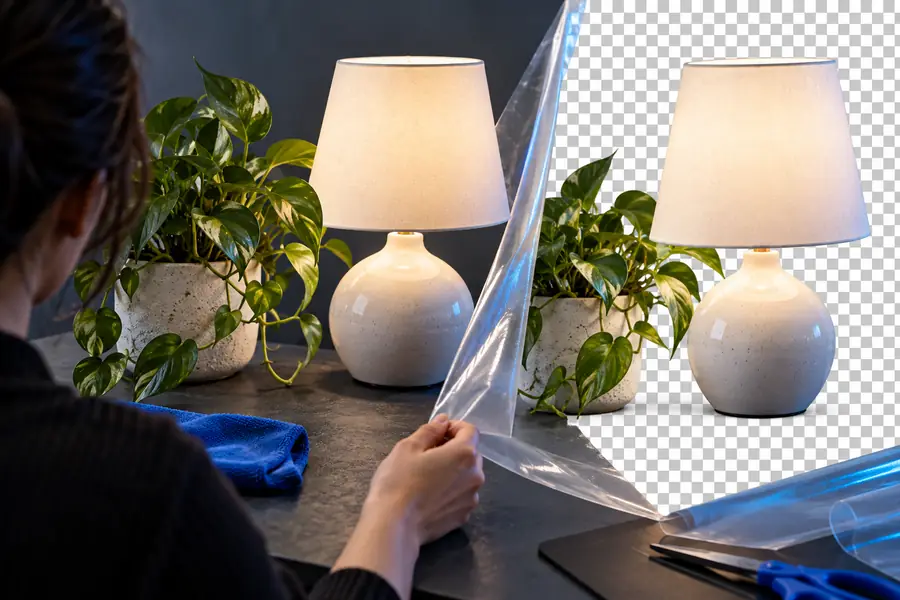
The visual result can look successful while the important safety questions remain outside the image itself.
Check privacy and pixels separately.
Compare the workflow
The best choice changes with the sensitivity of the image. Convenience answers how quickly you can edit; review answers whether you should upload it at all.
Quick bg eraser workflow
Safety-first workflow
Quick bg eraser workflow
Can this tool remove the background?
Safety-first workflow
Should this image leave my device or organization?
Quick bg eraser workflow
Low-sensitivity marketing or product images
Safety-first workflow
Images with personal, confidential, or regulated content
Quick bg eraser workflow
Less manual editing
Safety-first workflow
A clearer decision before upload
Quick bg eraser workflow
Assuming a clean result proves safe handling
Safety-first workflow
Spending more time on review and preparation
Quick bg eraser workflow
Inspect the edge and transparent result
Safety-first workflow
Inspect the edge, result, destination, and temporary copies
Quick bg eraser workflow
The subject is complex or the output is inconsistent
Safety-first workflow
The service terms, retention, or ownership are unclear
Limits and edges
A bg eraser is an image-editing route, not a complete security audit. Keep these limits visible when deciding what to upload.
A successful edit does not reveal whether the original or a temporary copy remains on a remote system.
WorkaroundRead the current privacy and retention information, and avoid sensitive uploads when the answer is unclear.
Removing a background does not remove faces, embedded metadata, text, or confidential details inside the subject.
WorkaroundCrop or redact sensitive content before using a background eraser.
Hair, glass, shadows, and similar details can be interpreted incorrectly, even when the preview looks convincing.
WorkaroundInspect the output at full size and use a more controlled editor when precision matters.
A tool may be acceptable for public product images but unsuitable for client, employee, medical, or confidential files.
WorkaroundFollow the stricter rule from your workplace, client agreement, or data-handling policy.
Make an informed edit
When the image is appropriate to upload, Bgeraser can be part of a simple background-editing workflow. Check the file first, review the result, and keep sensitive images out of routes you do not understand.
Check an imageYour questions
It can be appropriate for low-sensitivity images, but safety depends on the specific service, its handling of uploads, and the image you provide. A clean background result alone does not prove that the original file was stored, deleted, or protected in a particular way.
Check what the service says about uploads, retention, deletion, ownership, and access. Also inspect the image for faces, documents, metadata, addresses, or confidential details that should be removed before using a bg eraser.
Personal photos deserve more care than ordinary product images because they may reveal faces, homes, children, or other identifying information. Use a bg eraser only when the destination and handling terms are clear, and avoid uploading anything you are not comfortable sending to that service.
No. A background eraser changes the image content; it does not automatically guarantee protection of the original, its metadata, or temporary copies made during processing. Keep your own backup, remove unnecessary information first, and follow the stricter privacy rule that applies to your work.